Motion profile
Provide acceleration, deceleration, reversal frequency and settling requirements.
FAD High Precision High-Speed Planetary Gearbox is positioned for high-precision, high-speed planetary reduction. The supplied product catalogue presents 7 frame sizes, 47–255 mm, 14–2,000 N·m rated output torque across the listed sizes, and Single-stage ratios 4–10; two-stage ratios include 20–100. These family-level values are a selection envelope, not a substitute for confirming the exact size, stage count, motor adapter, output interface, duty cycle and permissible loads for an order.
Precision planetary gearbox
FAD High Precision High-Speed Planetary Gearbox is positioned for high-precision, high-speed planetary reduction. The supplied product catalogue presents 7 frame sizes, 47–255 mm, 14–2,000 N·m rated output torque across the listed sizes, and Single-stage ratios 4–10; two-stage ratios include 20–100. These family-level values are a selection envelope, not a substitute for confirming the exact size, stage count, motor adapter, output interface, duty cycle and permissible loads for an order.
The series data below is taken from the supplied product brochure. Values describe the published family envelope; the exact row for the selected model must be confirmed before order.
| Parameter | Published series data | RFQ confirmation |
|---|---|---|
| Series | FAD | Confirm the complete model code and output form. |
| Layout | Inline | Confirm machine envelope and motor orientation. |
| Frame range | 7 frame sizes, 47–255 mm | Choose the exact frame from torque, speed, interface and stiffness needs. |
| Rated output torque range | 14–2,000 N·m rated output torque across the listed sizes | Use the exact row for the chosen ratio and frame. |
| Ratio coverage | Single-stage ratios 4–10; two-stage ratios include 20–100 | Confirm exact offered ratio before motor sizing. |
| Backlash | Series overview lists standard backlash bands down to ≤1 arc-min single-stage and ≤3 arc-min two-stage, depending on size/configuration | Match the listed backlash class to the axis accuracy requirement. |
| Efficiency | Catalogue specification page lists ≥97% for 1 stage and ≥94% for 2 stages | Confirm at the selected ratio and operating condition. |
| Protection / lubricant | IP65; synthetic lubricant NYOGEL 792D is listed | Confirm environmental requirements and lubricant compatibility. |
| Temperature | -10 °C to +90 °C listed | Confirm ambient and thermal duty. |
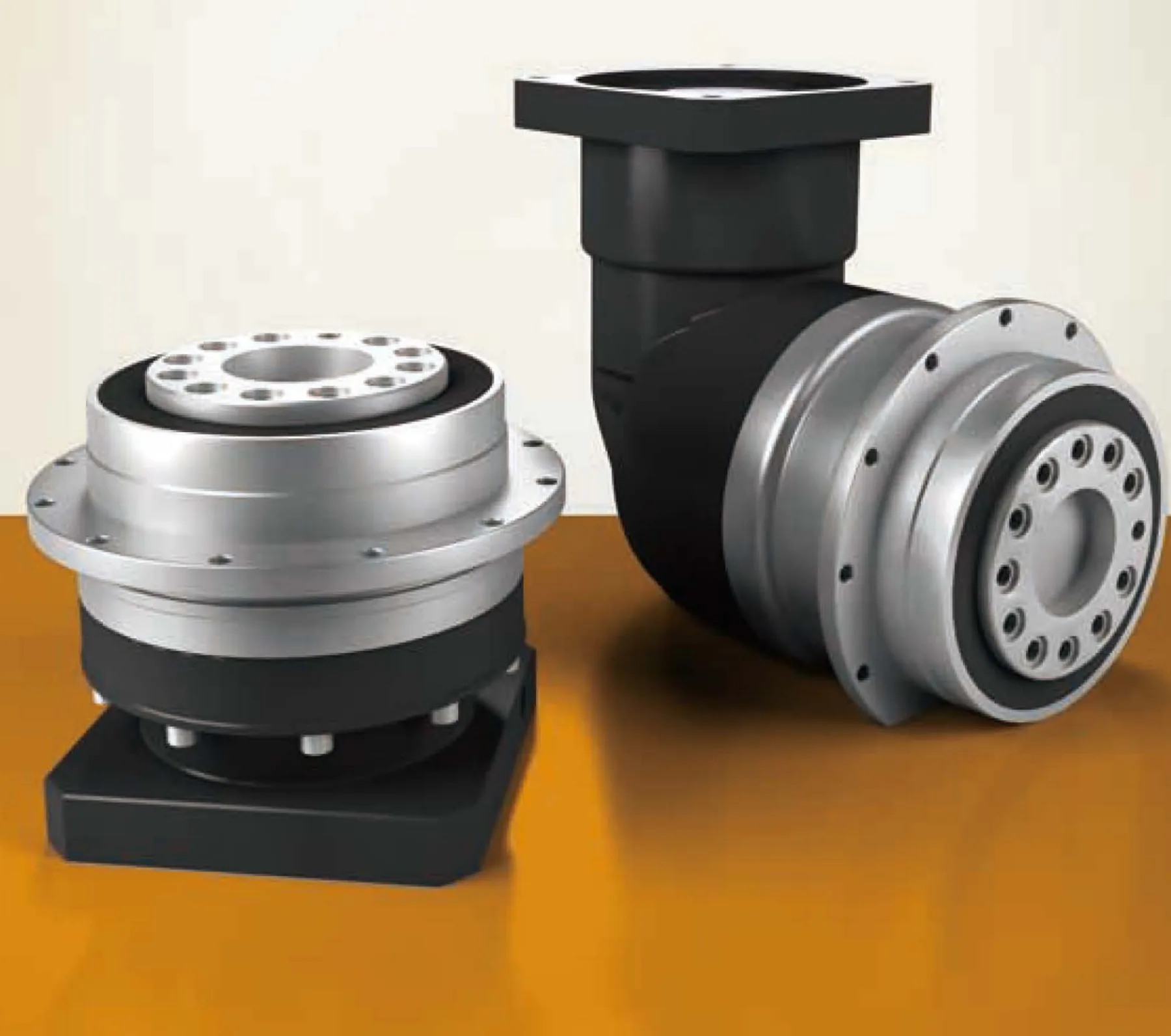
Start selection from the machine rather than from a preferred frame size. Record the motor type, motor speed, required output speed, continuous output torque, acceleration torque, emergency or jam torque, starts per hour and the proportion of time spent at each operating point. For FAD, the published ratio and torque ranges are broad enough that several combinations can appear feasible. The correct choice depends on which operating point governs and on how much dynamic margin the machine requires. If the gearbox is part of a servo axis, include reflected inertia and the motion profile. If it drives a conveyor, indexing mechanism or rotary table, include stop frequency and load reversals. If the requirement is only approximate, label it as an estimate in the RFQ and ask for the exact frame-level verification instead of treating the family range as an approved rating.
The ratio structure published for the FAD family separates single-stage and two-stage choices. That matters because stage count affects envelope, torsional behavior, efficiency, input-speed capability and the relationship between motor inertia and driven inertia. First calculate the target overall ratio from input and output speed. Then choose a listed ratio close to the target and recalculate output speed using the actual gearbox ratio. Recheck motor torque and speed after this step. Avoid selecting a ratio only because it appears in the family overview: the exact size and ratio combination must exist in the detailed table for the chosen frame. For a retrofit, also compare rotation direction, shaft height and the location of mounting faces so that a numerically correct ratio does not create an installation conflict.
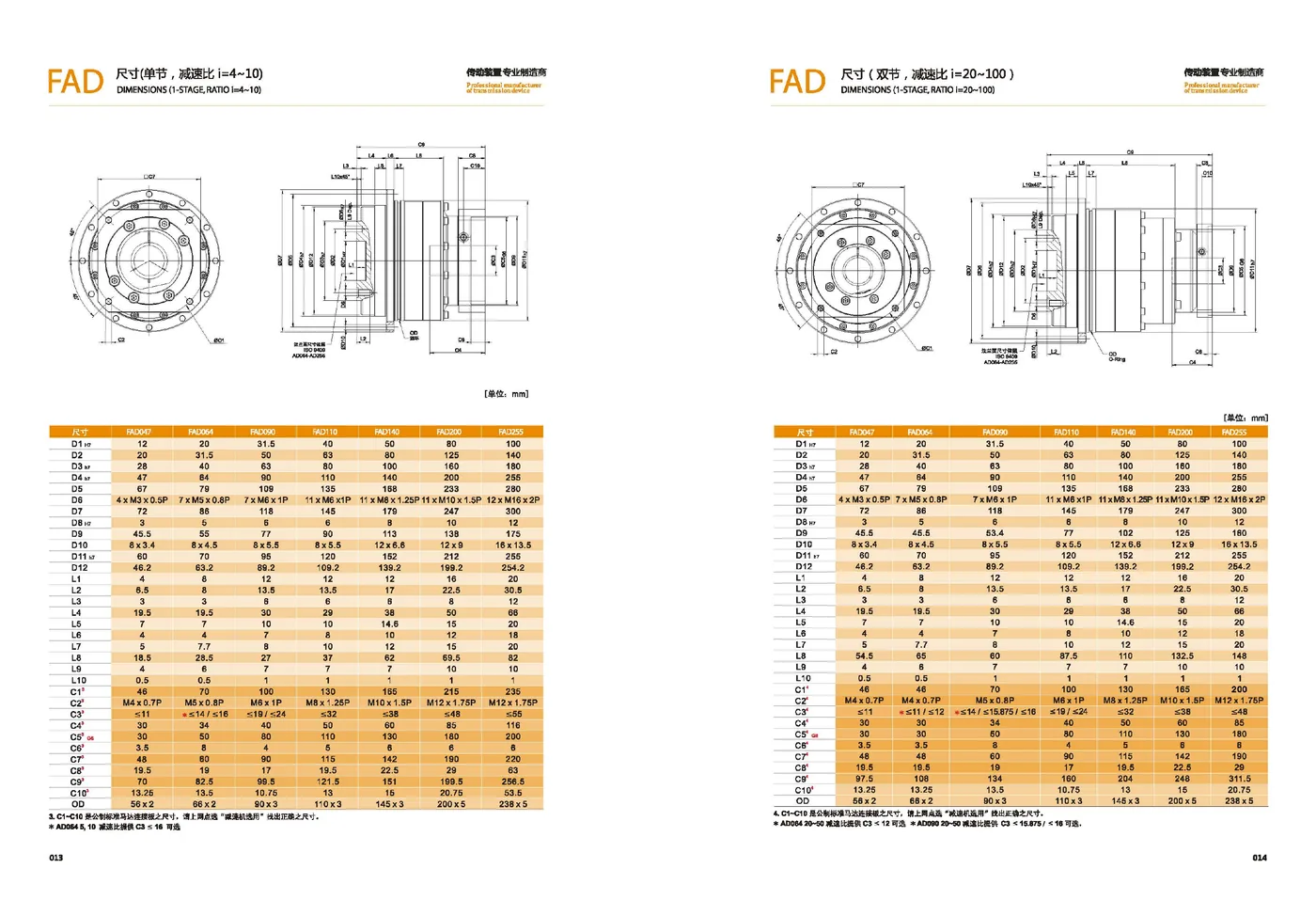
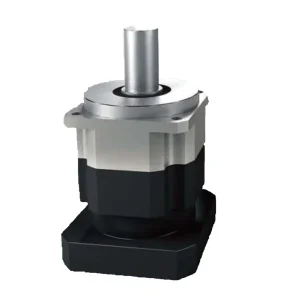
The product images and dimension sheets show the basic inline architecture, but an installation should not be released from a brochure photograph. Specify the motor flange, pilot diameter, input shaft or coupling, output shaft or flange, bolt circle, locating pilot, key or spline, available axial length, cable or motor clearance and the service space needed for assembly. For the right-angle variants, include the required orientation of the input relative to the output. For pulley-adapted variants, define the pulley datum, belt plane and overhung load. Before machining a mounting plate or ordering a motor adapter, request the controlled drawing for the exact model code.
Output torque is only one part of the load on a planetary gearbox. A belt pulley, pinion, sprocket or offset coupling can apply radial and axial force to the output bearings. Provide the force magnitude, direction and distance from the output reference face. When the load varies through a cycle, show the normal and peak values. If the machine has an external support bearing, identify that arrangement because it changes the gearbox bearing duty. This check is especially important for compact FAD installations where an otherwise suitable torque rating can be undermined by excessive overhung load. Do not infer permissible radial or axial load from frame size alone; request the exact curve or table for the selected model.
Series overview lists standard backlash bands down to ≤1 arc-min single-stage and ≤3 arc-min two-stage, depending on size/configuration. Treat that value as one contributor to the complete axis error budget. Coupling compliance, motor-shaft fit, pulley or pinion runout, mounting-plate deflection and bearing clearance can all create motion lost at reversal. For positioning equipment, state the allowable lost motion at the load and whether the requirement is measured at the gearbox output or at the machine endpoint. If the application is highly dynamic, ask for torsional stiffness and inertia data for the exact model, because a low-backlash gearbox alone does not guarantee a stiff servo system. The RFQ should identify whether the priority is precision at reversal, settling time, smooth velocity, compactness, or a balance among those factors.
Provide acceleration, deceleration, reversal frequency and settling requirements.
State whether the target is gearbox backlash, load-side lost motion or complete axis positioning accuracy.
Provide motor inertia, rated/peak torque, speed and the exact mounting interface.
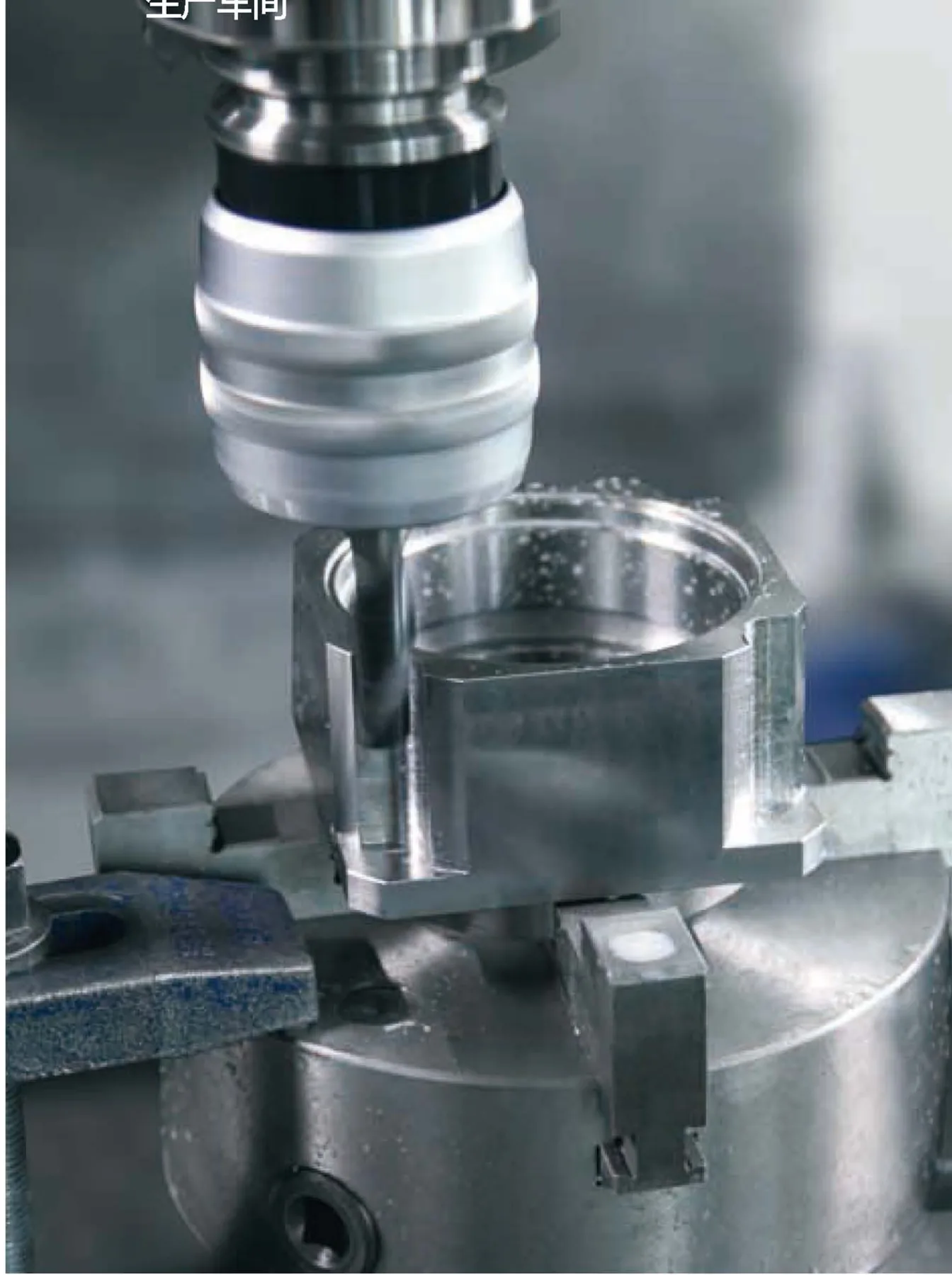
A useful purchase specification defines what will be checked when the FAD gearbox arrives and after it is installed. At minimum, verify model code, ratio, output form, motor adapter, visible damage and shaft rotation. For precision axes, add backlash or lost-motion verification and runout checks at the relevant interface. For dynamic machinery, record noise, vibration or temperature only if the measurement method and limit are agreed. Keep the catalogue image as an identification aid, but use the controlled drawing and purchase specification as the acceptance reference. This approach prevents a visually similar gearbox from being accepted when a critical mounting, ratio or interface detail is wrong.
For a drawing-led RFQ, identify the dimensions that affect concentricity, shaft fit, mounting, pulley or pinion alignment, and motor coupling. Ask for the inspection evidence appropriate to those characteristics instead of assuming a generic quality statement applies to every model.
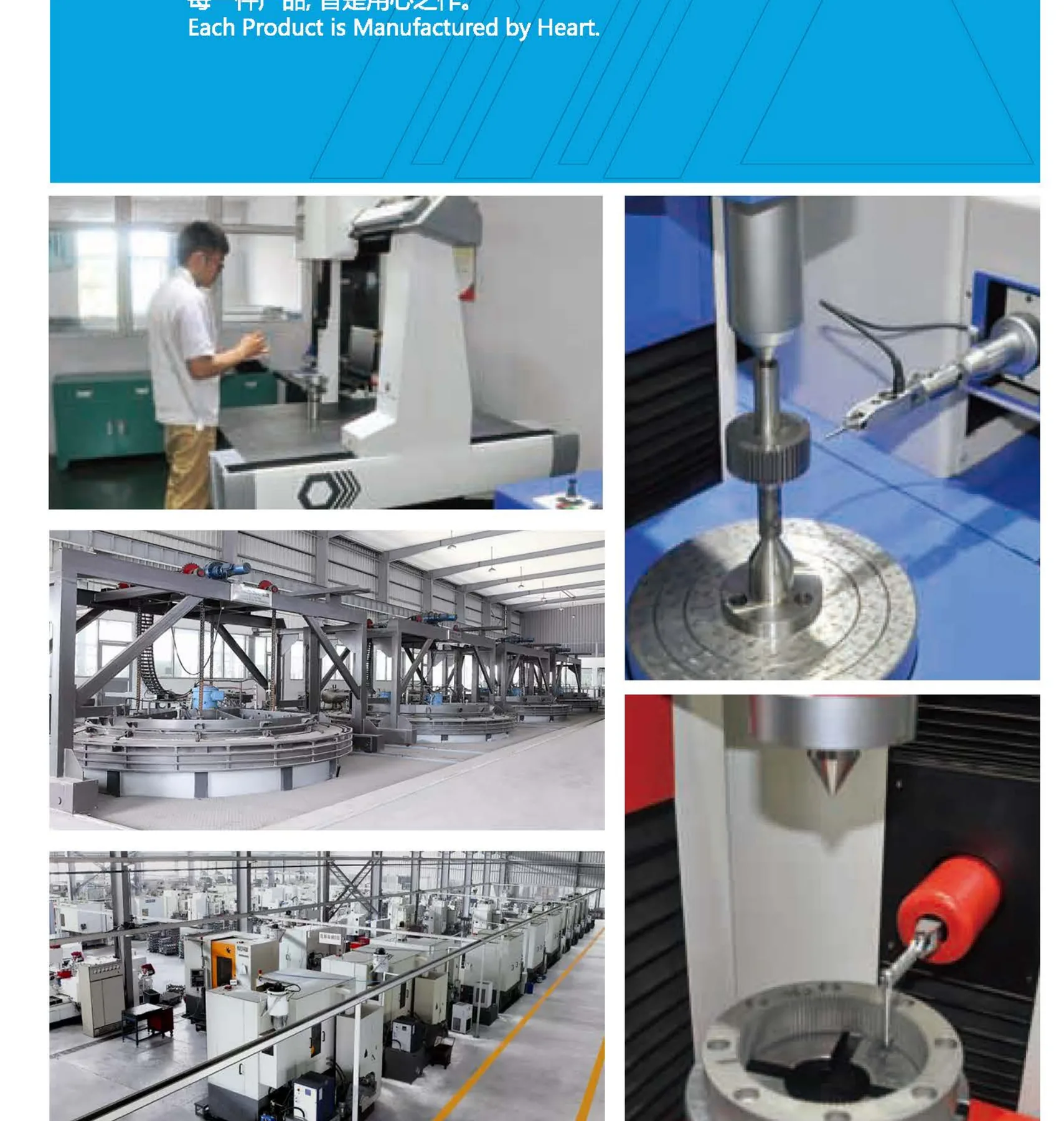
Continuous high input speed, frequent acceleration and an enclosed machine compartment can create a thermal condition very different from intermittent bench operation. State ambient temperature, expected enclosure temperature, operating hours per shift and whether the gearbox has free airflow. For FAD, use any catalogue temperature, lubricant or protection values only within the conditions stated for the exact model. Where those values are not present on the selected specification page, leave them as confirmation items. Also record cleaning exposure, dust, moisture and any orientation constraints. The goal is to ensure that sealing, lubricant and thermal capacity are reviewed before commissioning rather than after temperature or leakage becomes a field problem.
Before release, agree how ratio, rotation, backlash, noise, runout or other critical characteristics will be verified. The acceptance method should follow the machine requirement and the exact model specification.
No. Use the family range for an initial shortlist, then verify the exact frame, ratio, duty, input speed, external loads and interfaces.
Provide the motion profile, motor data, required output speed and torque, allowable lost motion, load inertia and mechanical interface.
No. Request the exact controlled dimension drawing for the selected model before releasing the mounting plate or adapter.
Send the motor model, target ratio or output speed, continuous and peak torque, duty cycle, mounting orientation, output interface, external loads and accuracy requirement.
Compare the precision planetary gearbox series and use the RFQ form below to request exact model data.
Engineering RFQ
Include motor model, output speed and torque, motion profile, mounting orientation, output interface, external loads and accuracy target.
Email the engineering brief