Engineering and selection
Epicyclic Gear Selection and RFQ Guide
Use this page to turn an early concept into a reviewable input package for gears, carriers or a complete planetary drive.
Define the motion relationship first
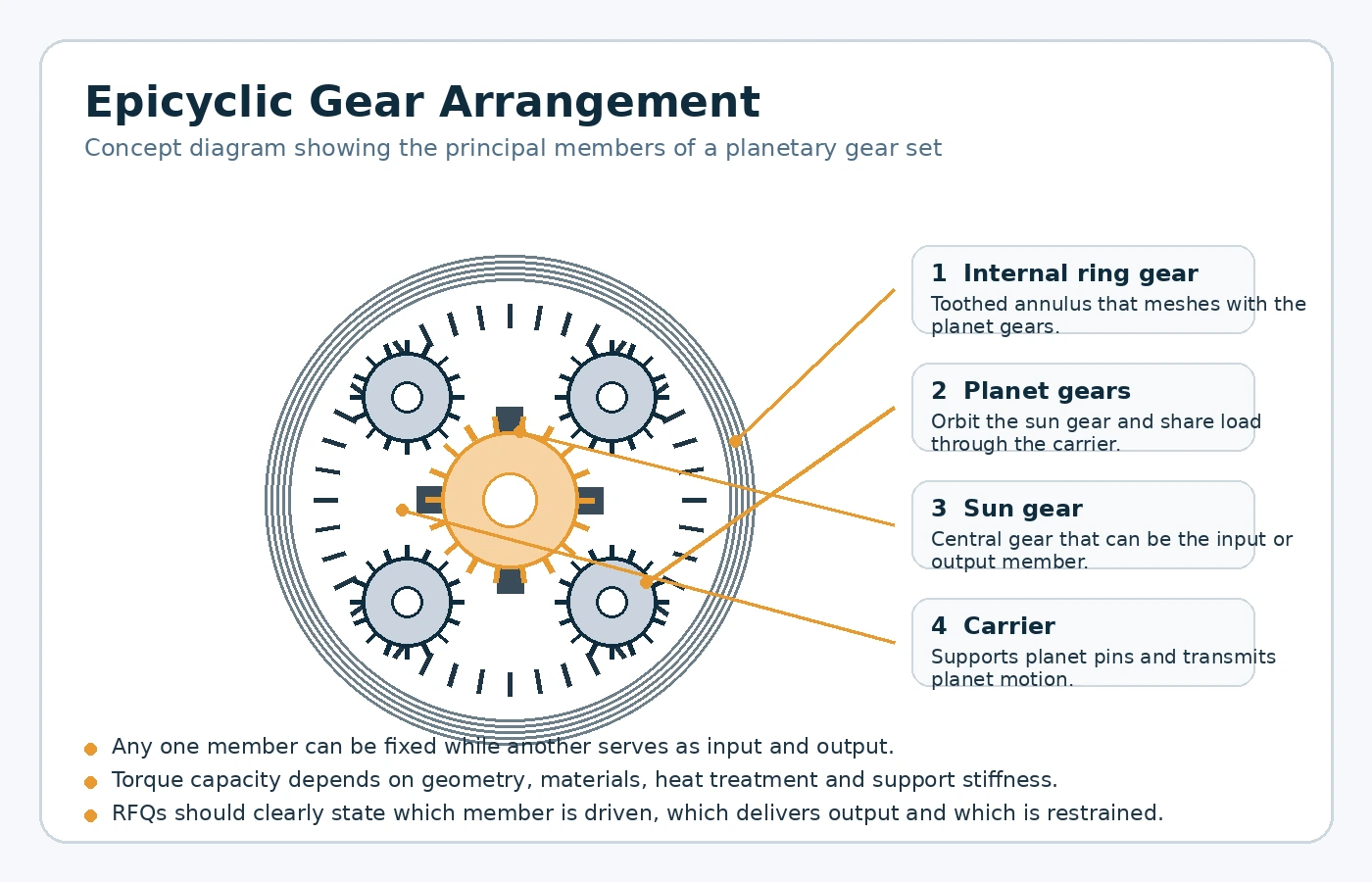
State the input member, output member and restrained member. If more than one member is controlled, describe the operating modes. Include rotation direction and whether regeneration, backdriving or holding behavior matters to the machine.
A requested ratio without this relationship can be ambiguous. The same tooth counts participate in different speed relationships depending on which member is fixed and which is driven.
- Name the input member
- Name the output member
- Name the restrained or controlled member
Build the engineering input package
| Input group | Minimum useful information | Typical clarification |
|---|---|---|
| Duty | Continuous, peak, shock, reversing, starts and operating hours | Is the peak repeatable duty or an exceptional event? |
| Speeds | Input and output ranges, overspeed or backdrive cases | Are speeds measured at the motor, gearbox shaft or machine member? |
| Geometry | Envelope, centerline, ratio target and stage constraints | Can the diameter or axial length move if tooth geometry requires it? |
| Interfaces | Shafts, splines, keys, pilots, flanges, fasteners and bearings | Which part owns radial and axial load support? |
| Materials | Required grade, heat treatment, hardness zone and finish | Is the material fixed by an approved drawing or open to proposal? |
| Quality | Critical characteristics, measurement method and records | What inspection evidence is required with the shipment? |
Geometry and manufacturability review
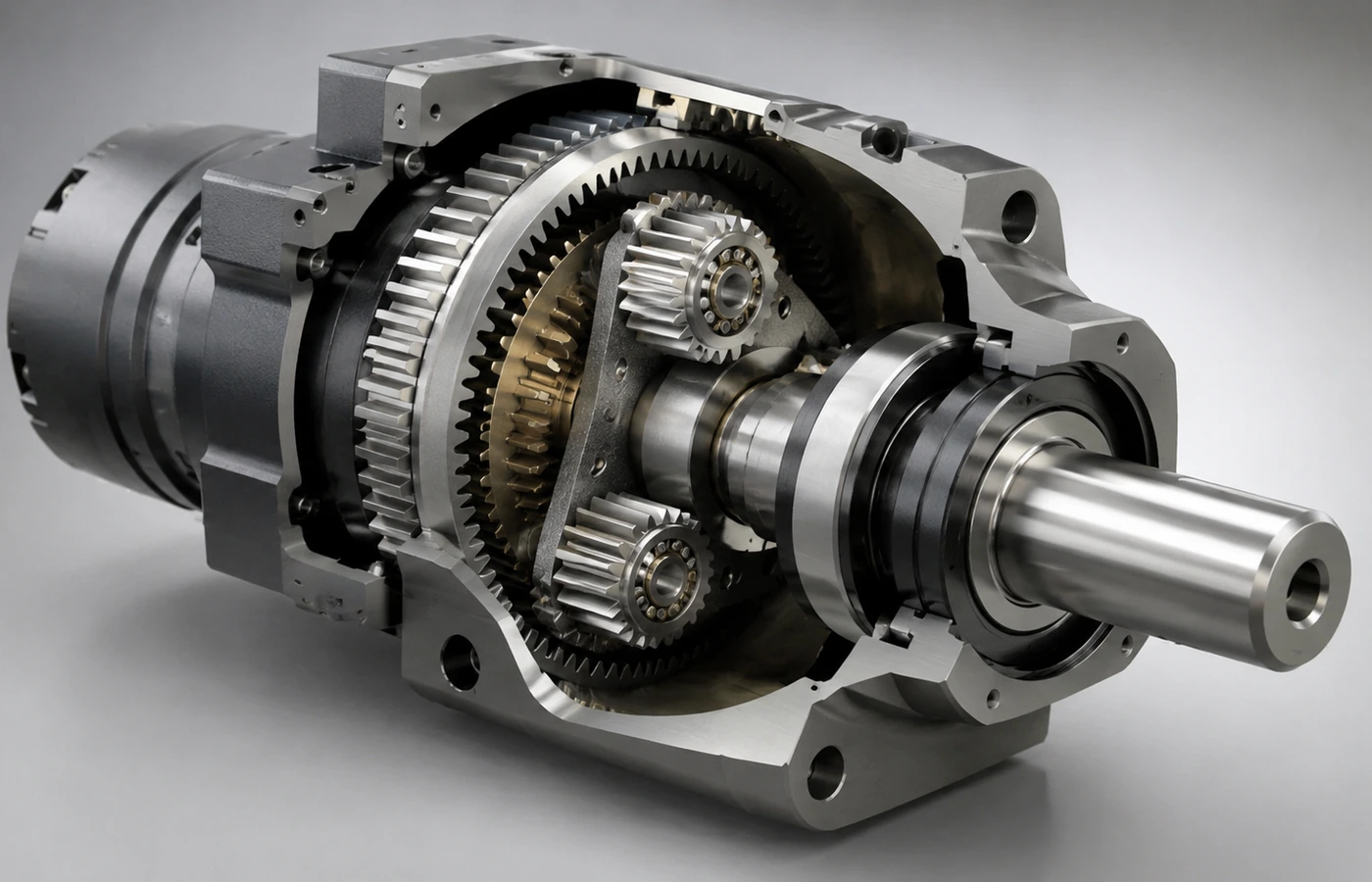
Internal and external gears must be reviewed as a mating system. Tooth form, module or diametral pitch, pressure angle, helix data, profile modifications, face width and backlash target interact. The planet count and carrier arrangement add assembly, spacing and load-sharing constraints. A geometry proposal should therefore include the complete mesh definition and the intended datum scheme.
Manufacturability review checks cutter access, undercut or interference risk, heat-treatment distortion allowance, finishing route and measurement access. These checks are especially important when an existing envelope is preserved but the ratio or duty changes.
Inspection planning
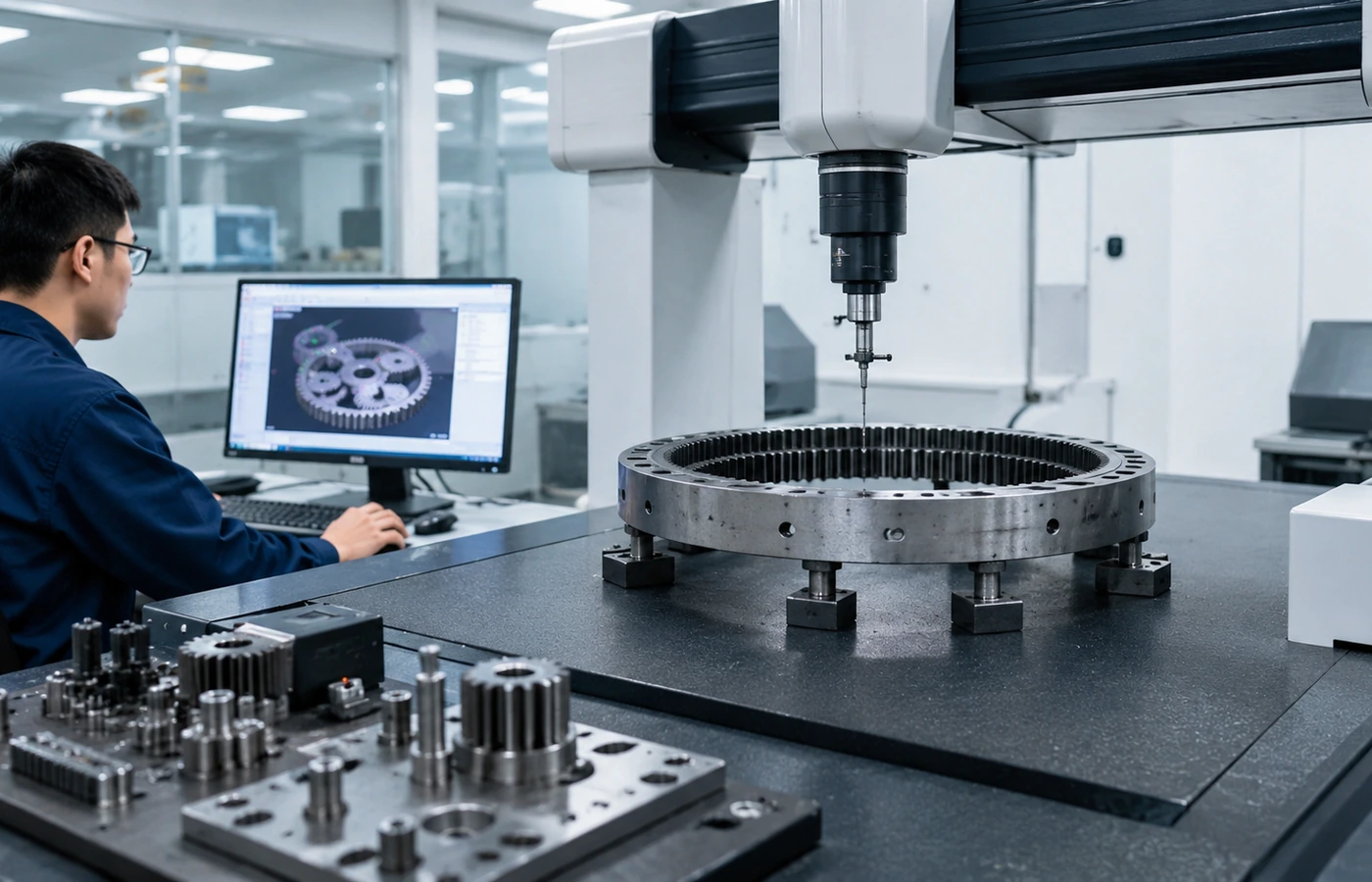
Define which drawing characteristics control function and how each will be measured. Depending on the project, the plan may address tooth geometry, pitch variation, runout, lead, profile, tooth thickness, bore or spline relationship, carrier pin position and assembly contact. Not every project requires the same report, so the RFQ should distinguish mandatory records from process-control checks.
When a buyer requires a particular inspection format or equipment correlation, include that requirement before quotation. The supplier can then confirm capability or propose a technically appropriate alternative.
RFQ checklist
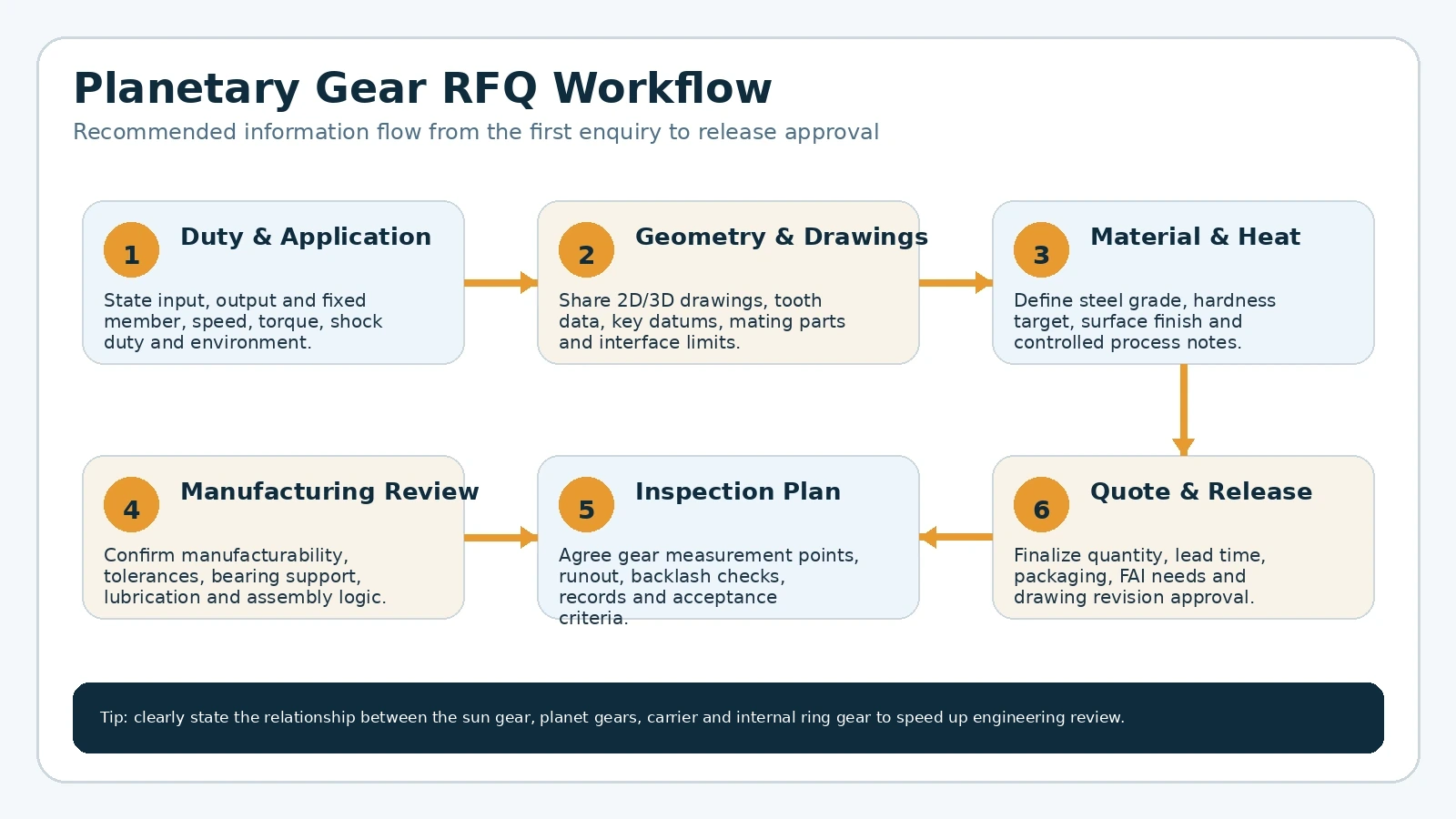
- Assembly drawing and individual controlled drawings
- Input, output and restrained member for every operating mode
- Ratio target and allowable variation
- Continuous, peak, shock and reversing load description
- Input and output speed ranges
- External radial, axial and overturning loads
- Shaft, spline, bore, key, pilot, flange and fastener interfaces
- Operating temperature, contamination, corrosion and lubrication context
- Quantity, prototype or production status and requested documentation
- Critical characteristics and inspection-record expectations
Engineering enquiry
Request a drawing and duty review
Provide what is known and mark unknown items clearly. The first useful output is often a clarification list that separates confirmed inputs from decisions still open.
- Drawing or assembly sketch
- Duty and interface summary
- Quantity and inspection needs