Description
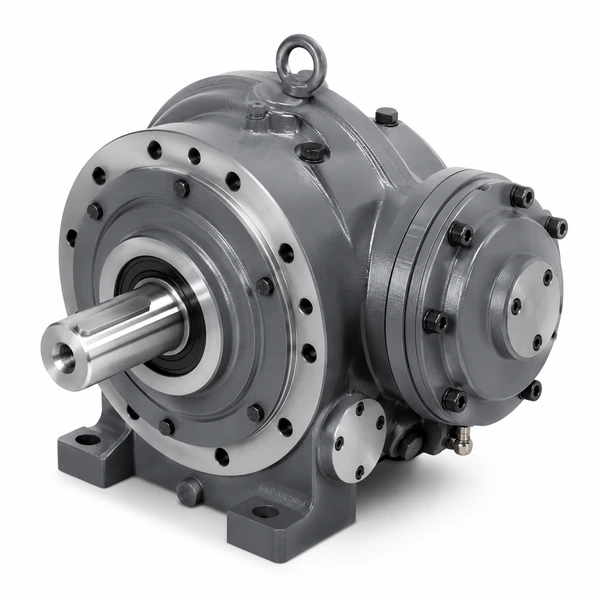
RFQ product family
Planetary Gearbox Assembly
A complete planetary gearbox RFQ connects the gear train to bearings, housing, lubrication, sealing and input/output interfaces.
RFQ identifier: GEP-PGA-001
Start with
- Controlled drawing or assembly sketch
- Complete mating-tooth definition
- Input, output and restrained-member relationship
- Duty cycle and speed range
- Interface and inspection requirements
Product overview
Use this family when the quotation boundary extends beyond loose gearing. The project may include a single or multi-stage gear train, carrier, housing, shafts, bearings, seals and mounting features. Motors, hydraulic drives, brakes, encoders or couplings can be buyer-supplied or included as interface-controlled items. The scope must be explicit so structural and lubrication responsibilities do not fall between suppliers.
This page defines a quotation scope rather than a stocked configuration. Tooth numbers, size, material, heat treatment, backlash, accuracy class and acceptance limits remain confirmation points until they are supported by the buyer’s controlled data and an approved technical proposal.
Structure and mating components
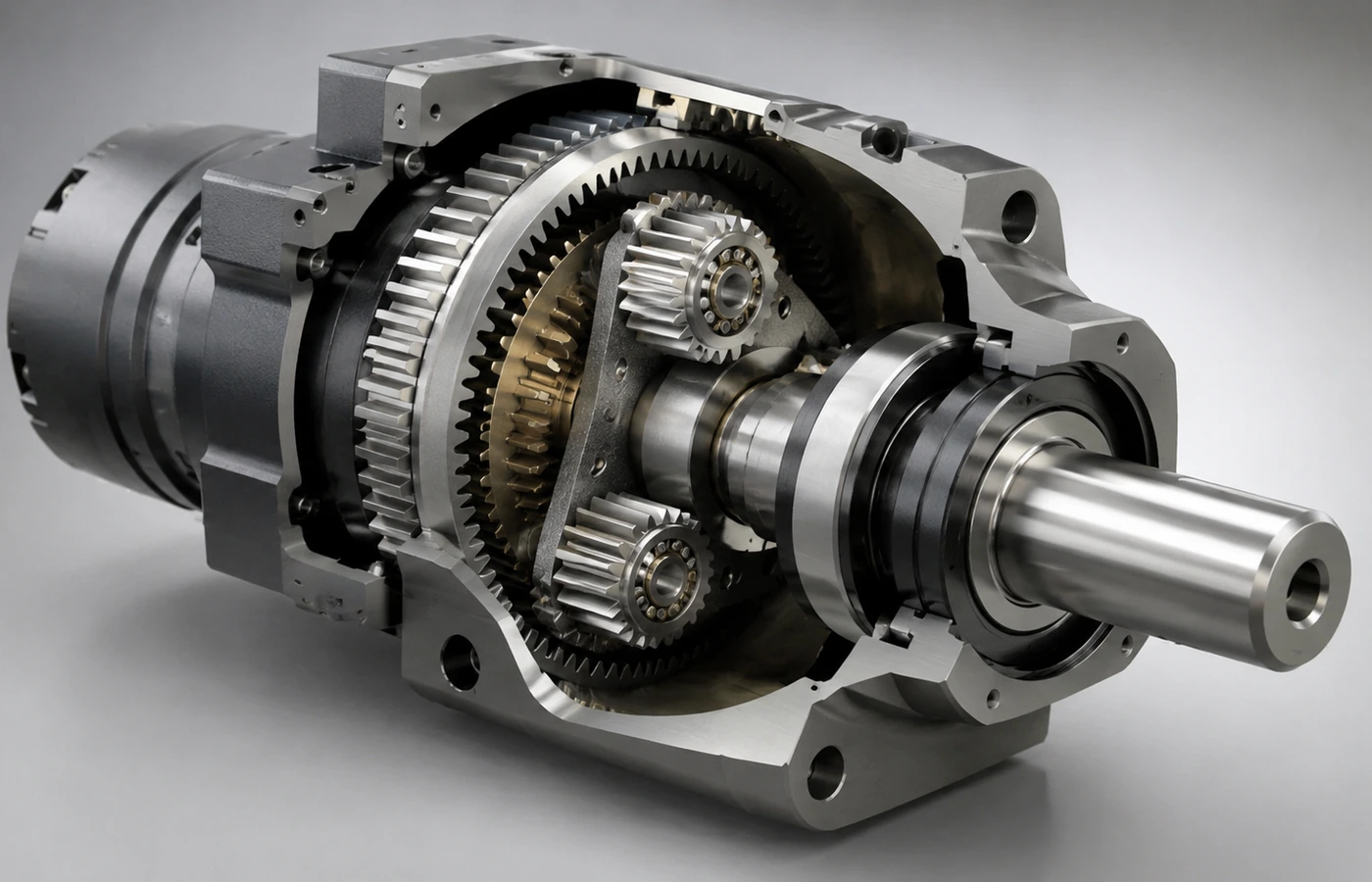
An epicyclic component works inside a system of related datums and load paths. The sun gear, planets, carrier, ring gear, bearings, shafts and housing influence mesh alignment. Even when the RFQ covers one loose gear, the mating geometry and support arrangement are needed to assess fit and manufacturability.
Provide motor or hydraulic input details, output shaft or flange geometry, mounting orientation, external loads, brake or holding arrangement, service access and the surrounding machine envelope. Identify which bearings support machine loads and which are internal to the gearbox.
Technical definition required for quotation
| Data group | Information to confirm |
|---|---|
| Tooth system | Module or diametral pitch, pressure angle, tooth count, helix data where applicable, profile and lead requirements. |
| Geometry | Face width, tip and root controls, bore or spline, shoulders, pilots, bolt pattern and datum relationships. |
| Mesh | Mating part data, backlash or tooth-thickness basis, center-distance relationship and assembly condition. |
| Duty | Continuous, peak, shock and reversing load description with input and output speed ranges. |
| Material route | Controlled material grade, heat treatment, hardness requirement, finish allowance and surface protection. |
| Verification | Critical characteristics, inspection method, report format, sample plan and traceability expectation. |
Application and operating context
Assembly projects can serve automation, process machinery, mobile equipment, mixers, winches and custom transmissions. The duty description should include operating modes, temperature, contamination, lubrication strategy and maintenance access.
State the machine function and installation environment rather than relying on a broad industry label. Temperature, contamination, corrosion, lubrication, orientation, external shaft loads and service access can affect the component and the surrounding assembly.
- Describe all operating modes
- Separate transmitted load from external shaft load
- Identify environmental and maintenance constraints
Selection and customization guidance
Can the geometry be proposed from a target ratio?
A concept review can begin with ratio, envelope and motion relationship, but released geometry also needs duty, interfaces, material route, manufacturability and acceptance criteria.
Can an existing part be reproduced?
A sample is useful context. A controlled drawing or agreed reverse-engineering scope is still needed to establish critical dimensions, material, heat treatment and inspection responsibility.
How should backlash be specified?
State the functional need, measurement condition and mating component basis. Backlash cannot be treated as a single isolated gear value without reference to tooth thickness, center distance and assembly conditions.
What quantity should be provided?
State prototype, validation and expected production quantities separately. This helps align tooling, process validation and inspection planning without creating a delivery promise.
Manufacturing and quality planning
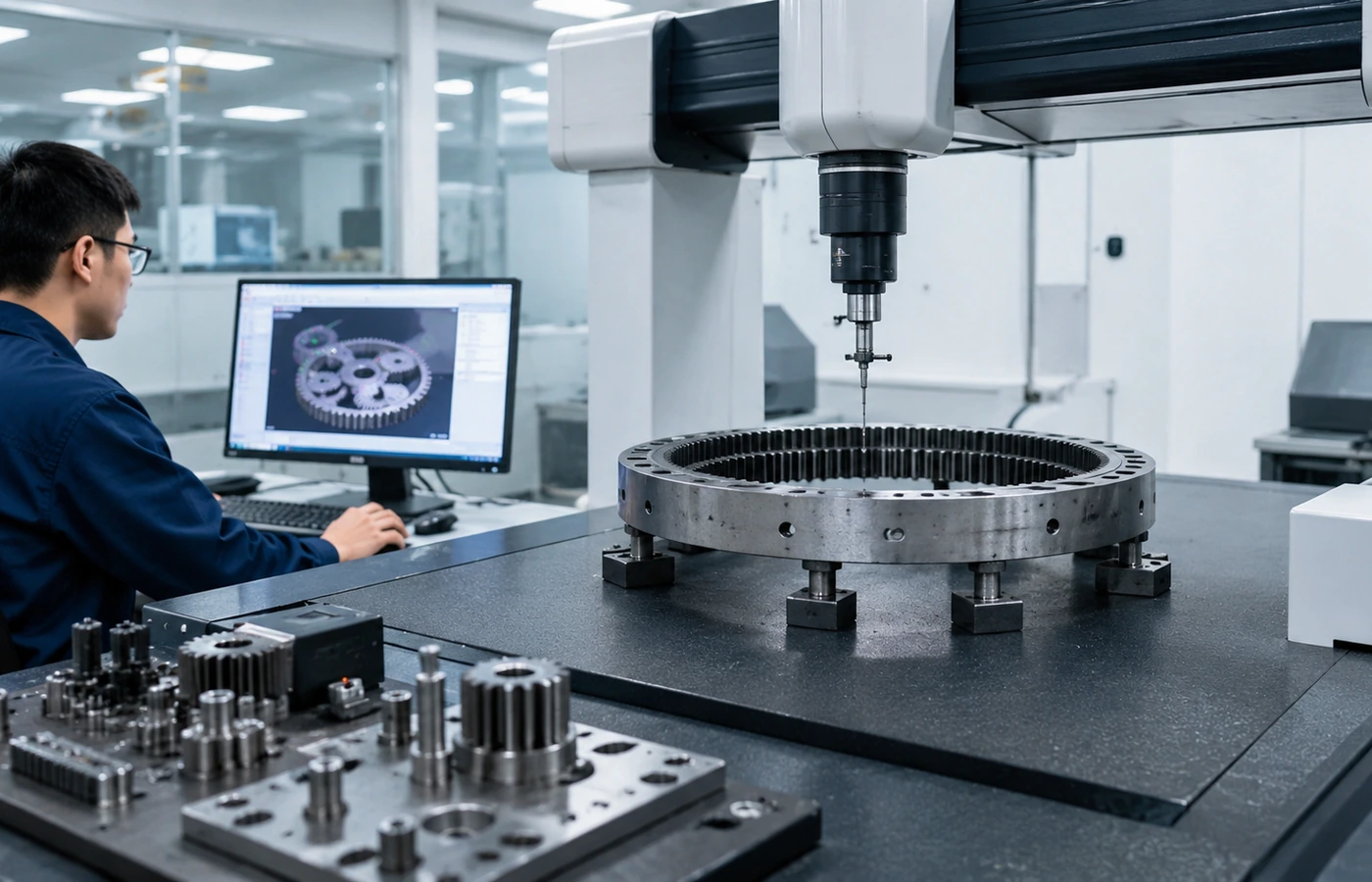
The manufacturing route may include blank preparation, turning, gear cutting, deburring, heat treatment, hard finishing, cleaning and protective treatment. The exact sequence depends on geometry and controlled requirements; it should not be inferred from a generic product photo.
Define dimensional release requirements together with functional checks such as rotation, contact, leakage, vibration or noise where applicable. Test limits must be supported by an agreed method and operating condition rather than copied from a generic catalogue.
Before production, confirm the revision hierarchy, approval status, deviation process and records required at release.
RFQ questions and answers
Use these answers as a preparation guide. Final values remain subject to the controlled drawing and engineering review.
What components are inside the supplier scope?
List the gear train, carrier, housing, bearings, shafts, seals, lubricant, adapters, brake and any buyer-supplied components.
What motor, hydraulic drive, brake or encoder interfaces are required?
Provide flange, pilot, shaft, coupling, bolt-pattern and control-device interfaces plus allowable installation length.
Which external loads reach the output and housing?
Separate transmitted torque from radial, axial and overturning loads, and state which bearings or structures support them.
What mounting orientation and environment apply?
Define orientation, mounting face, ambient temperature, contamination, corrosion, ingress exposure and service access.
How is lubrication filled, retained and serviced?
State oil or grease preference, fill and drain access, sealing, breather needs, maintenance basis and acceptable leakage criteria.
What functional and dimensional acceptance records are required?
List dimensional inspection plus agreed no-load rotation, backlash, contact, leakage, noise, vibration or loaded functional tests.
Engineering enquiry
Request a review for Planetary Gearbox Assembly
Attach the drawing or sketch and describe the complete machine relationship. Unsupported values will remain open confirmation points rather than being converted into catalogue claims.
- Drawing or assembly sketch
- Duty and interface summary
- Quantity and inspection needs