Engineering guide
Planetary Gearbox Selection: Questions Beyond Ratio
Ratio is necessary, but the surrounding machine determines whether a planetary drive can be integrated and verified.
Define the whole operating envelope
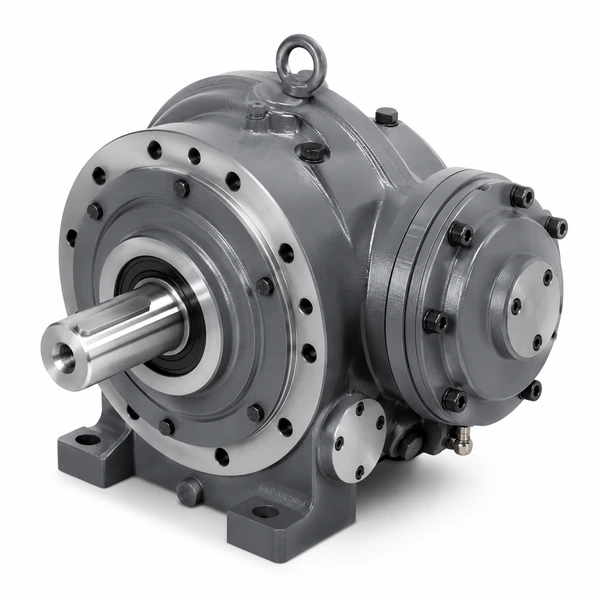
State input and output speeds over every mode, including starts, stops, reversals, coasting and backdriving. Separate continuous transmitted load from transient peaks and external shaft loads. Explain whether the gearbox supports a wheel, drum, sprocket, arm or other machine member.
- Normal and peak operating modes
- External shaft loads
- Starts, reversals and backdriving
Assign bearing and structural responsibility
A gearbox output may transmit torque without being intended to support large radial, axial or overturning loads. Show the external load location and direction, and identify machine-side support bearings. The mounting face, housing stiffness and fastener arrangement also form part of the load path.
- Load magnitude and direction
- Distance from the support bearing
- Housing and fastener load path
Specify motor, brake and control interfaces
Provide the motor or hydraulic drive interface, coupling arrangement, brake or holding concept, encoder needs and controller operating modes. For high-cycling motion, motor inertia and gearbox torsional behavior should be reviewed as one system rather than as isolated catalogue values.
- Input interface
- Brake or holding method
- Feedback and control modes
Plan lubrication and environment
State mounting orientation, operating temperature, contamination, washdown or corrosion exposure, sealing interfaces and maintenance access. If a lubricant or fill-for-life requirement is controlled, include the approved specification and validation basis. Avoid assuming that a generic product photo establishes the sealing or lubrication method.
- Mounting orientation
- Contamination and temperature
- Fill, drain and service access
Define acceptance tests
| Test area | Define before quotation |
|---|---|
| Dimensional | Critical interfaces and datum relationships. |
| Rotation | Speed, direction, load condition and duration. |
| Contact | Method, marking condition and acceptance basis. |
| Leakage | Fluid, pressure or orientation and observation period. |
| Noise or vibration | Operating condition, mounting, instrument and limits when controlled. |
Selection summary
A complete request connects ratio and torque to the machine envelope, external loads, interfaces, duty cycle, environment, lubrication and acceptance evidence. Where values are not yet known, list them as open decisions rather than filling the gaps with an unrelated reference design.
- Confirm ratio and speed range
- Confirm load support and interfaces
- Confirm environment and acceptance tests

Match the gearbox to the complete machine axis
Motor inertia, control behavior, external output load, mounting stiffness and service access influence the result. A ratio-only comparison can miss the integration risks that determine real machine performance.
Describe acceleration, deceleration, reversing frequency and any emergency or jam condition. These events can control bearing, shaft, carrier and housing decisions even when the continuous torque appears modest.
- Describe dynamic events
- Separate torque from external loads
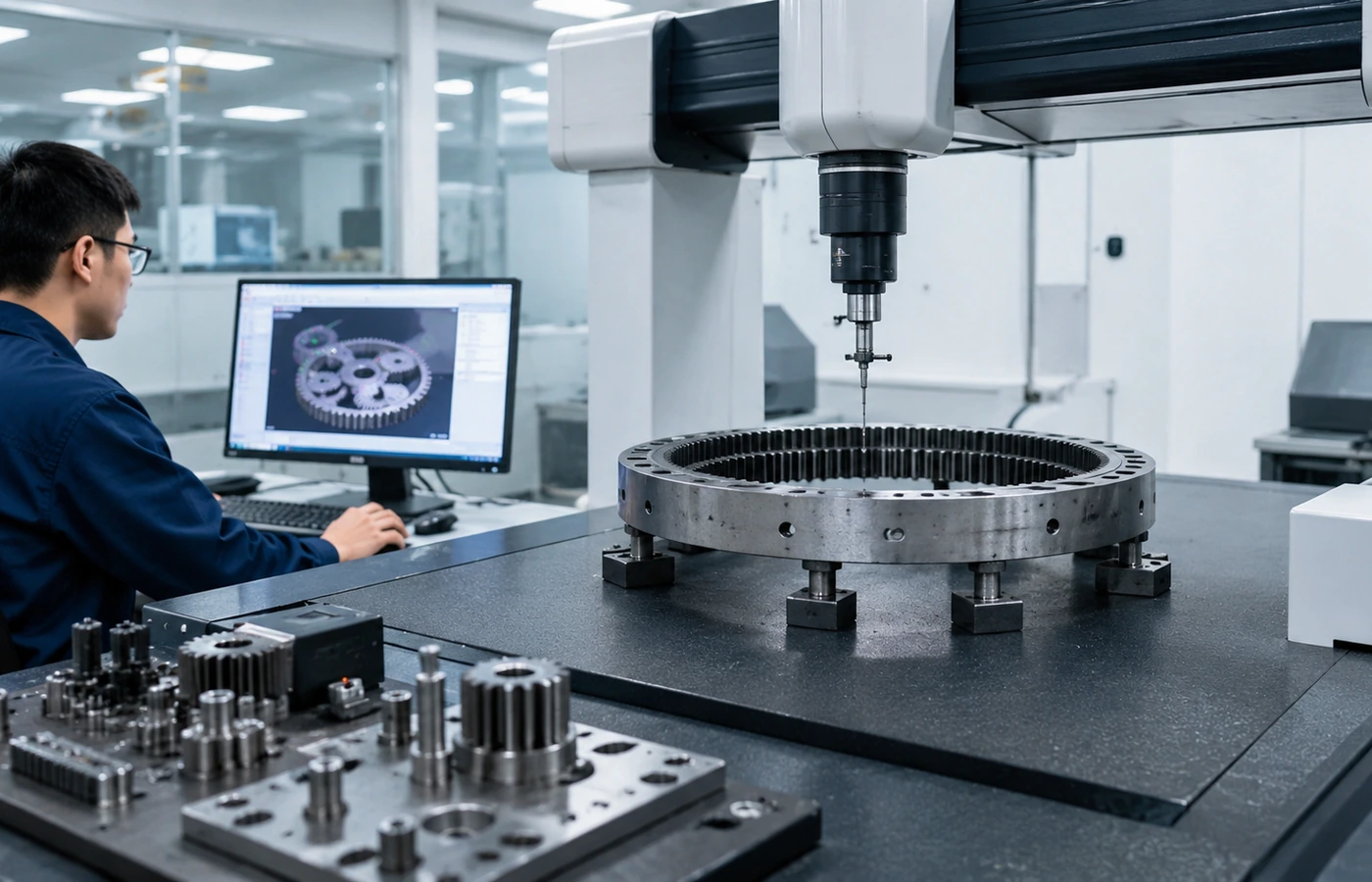
Define acceptance tests before the order
State the required dimensional records and any no-load rotation, leakage, backlash, noise, vibration or loaded test. Test conditions and limits must be agreed rather than copied from an unrelated catalogue.
Clarify whether tests are performed with the buyer motor, a test motor or a fixture, and whether the results are recorded at ambient or stabilized temperature. The acceptance method should be repeatable at both supplier and receiving locations.
- State test conditions
- Agree measurable release limits
Engineering enquiry
Use the guide to prepare your RFQ
Send the relevant drawing, duty and interface data. The technical review will identify confirmation points before any product claim or geometry is approved.
- Drawing or assembly sketch
- Duty and interface summary
- Quantity and inspection needs